
As what is a child wanted?
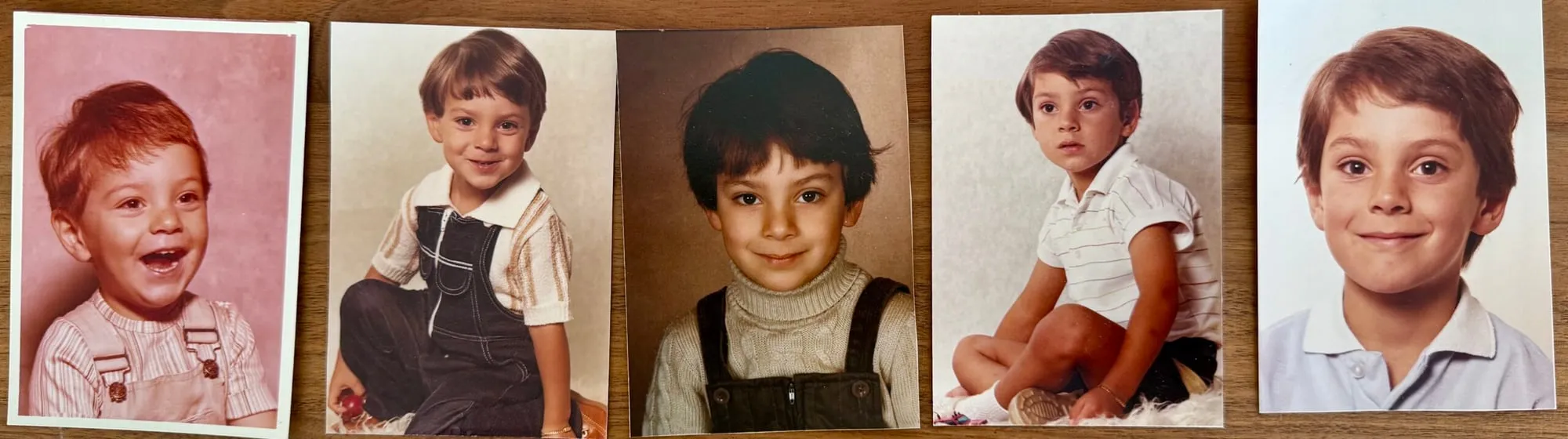
As what were you wanted as a child?
Someone tells me he never feels quite right. Too much, too little, “different,” or out of place. That reaches me and it moves me. Inwardly I then ask myself: As what was this child actually wanted? The question touches something I hear again and again in guidance processes, and often it is not said that directly.
In The Defective Doll (link), Teal Swan describes a dynamic: A child is not experienced primarily as a being of its own, but as something that is supposed to fulfill a function. As proof or as comfort. In any case as an extension of one’s own self. As a way of getting what one never got oneself. That sounds harsh when I write it like this. It probably almost never happens consciously. And yet an old commercial comes to mind: My house, my car, my boat. My child.
I believe most parents love their children with all their heart. What I am concerned with is what happens when one’s own unhealed needs meet someone who cannot yet protect themselves. The young person then begins to learn: I am safe when I fit. I am allowed to be here when I am not too much. I am loved when I soothe. What the child does not learn is “My parents were overwhelmed.” We learn something like that, if at all, only much later. The child learns “Something is wrong with me.”
That is the moment I prick up my ears. It is not the dramatic event as such, but this conviction that has seeped in: that one’s own being is the problem. In psychological terms, what is missing is what is called attunement: the experience of being perceived as a real counterpart. Not as a role, not as a projection, but as someone who is the way she is. How things go on from there varies. Some adapt until they are unrecognizable. Others remain their own person and pay for it with a loneliness they cannot explain to themselves. Often both also happen in alternation and depending on the situation. Neither is this person’s character. Rather, both are an answer to an early question that was never clearly asked: Am I welcome the way I am? So the real question is not “Was this child wanted?” but “As what was this child wanted?”
I find this question uncomfortable. For me personally, too, because it asks something of me. The question shows me how hard it can be to really see another person as a being of their own. Without constant expectation, that is, and without the need to have mirrored back to me what I myself am missing. Here the distinction also blurs for me between whether we are still talking about the early days of childhood or about how we are with one another in everyday life as well. At its core, it is about perceiving the person across from me—and a child in particular—as a subject with an inner world that is their own and unique, and precisely not as an object in my emotional household—or that of the parents. Especially in the preverbal time of life, love needs emotional presence and curiosity. Not toward the child as a mirror, but toward the child as something foreign, also as something of one’s own, but definitely as something still unknown.
Perhaps this is one core of maturing: noticing when I am perceiving someone, and when I am looking for something instead. I believe that never succeeds completely. But the difference between someone who tries and someone who does not can be felt.